
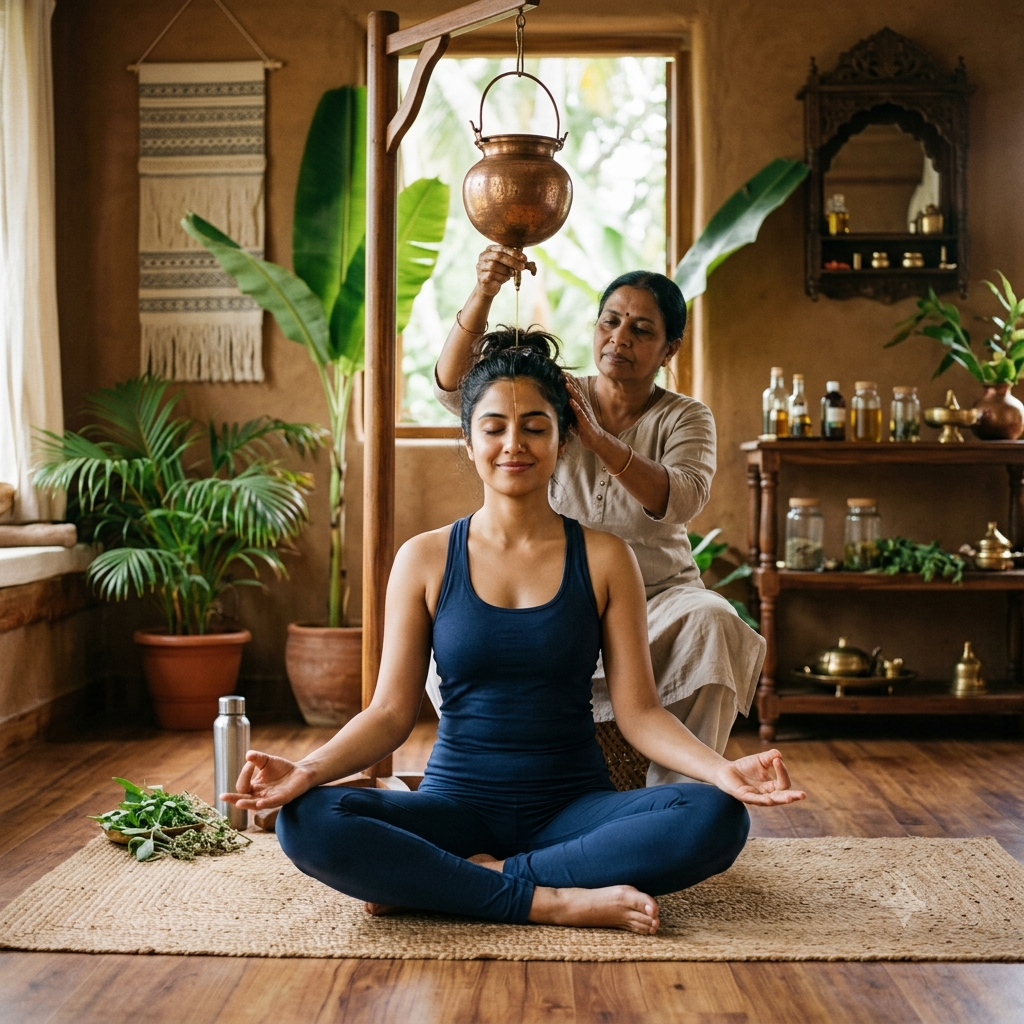
Kerala is widely known for combining yoga, meditation, traditional Ayurvedic therapies, herbal treatments, and nature-based wellness programs. Many yoga centers and retreat resorts offer Ayurveda as a complement to yoga, with programs designed around relaxation, rejuvenation, stress management, mobility, and lifestyle support. Treatments vary from one center to another. Some offer short wellness packages, while others provide physician-guided programs lasting one to several weeks.
What Is Ayurveda?
Ayurveda is a traditional Indian system of health and wellness that emphasizes individualized routines, diet, herbs, massage, lifestyle practices, and therapies. Many Kerala retreats organize treatments around a person’s constitution, health concerns, daily routine, and treatment goals. A reputable center should begin with a consultation rather than assigning the same treatment to every guest. Kerala Tourism lists a range of recognized Ayurveda centers offering therapies alongside wellness and yoga programs.
Common Ayurvedic Treatments
Abhyanga
Abhyanga is a full-body oil massage using warm herbal or medicated oils. Therapists apply the oil with rhythmic strokes, and the treatment is commonly included in relaxation, rejuvenation, and stress-management programs.
Often chosen for:
- General relaxation.
- Muscle tension.
- Supporting a calming wellness routine.
- Nourishing and moisturizing the skin.
The treatment may be performed by one or more therapists depending on the center and package.
Shirodhara
During Shirodhara, a steady stream of warm oil or another liquid is poured gently over the forehead while the guest rests comfortably. It is often included in relaxation and stress-relief programs.
Often chosen for:
- Mental relaxation.
- A calming retreat experience.
- Supporting meditation and rest.
Although many centers promote Shirodhara for specific health conditions, it should not be considered a guaranteed treatment for insomnia, anxiety, or neurological problems.
Pizhichil
Pizhichil involves the gentle pouring of warm medicated oil over the body, usually alongside massage. It is traditionally presented as a rejuvenating therapy and may be offered as part of longer Ayurvedic programs.
Often chosen for:
- Relaxation.
- Rejuvenation packages.
- Supporting comfort in the muscles and joints.
Kizhi Therapy
Kizhi, also called herbal bolus therapy, uses warm cloth bundles filled with herbs, leaves, powders, or rice. The bundles may be applied or massaged over selected areas of the body.
Common forms include:
- Njavarakizhi: Uses cooked medicinal rice.
- Elakizhi: Uses herbal leaves.
- Podikizhi: Uses herbal powders.
These treatments may be included in programs focused on muscular comfort, stiffness, or rejuvenation.
Swedana
Swedana is a traditional herbal steam treatment. The body may be exposed to herbal steam after oil massage, depending on the practitioner’s assessment.
Often included in:
- Rejuvenation programs.
- Massage packages.
- Therapies intended to promote relaxation and warmth.
Guests with cardiovascular conditions, pregnancy, heat sensitivity, or uncontrolled blood pressure should ask a qualified professional whether steam therapy is suitable.
Udvarthanam
Udvarthanam is a dry herbal powder massage. The powder is applied to the body with firm strokes and is commonly marketed as an invigorating or body-toning treatment.
Some retreats include Udvarthanam in weight-management or body-care packages. However, it should not be presented as a standalone method for reducing body fat. Sustainable fat loss depends primarily on overall nutrition, physical activity, sleep, and health factors.
Nasyam
Nasyam involves administering herbal oil or preparations through the nasal passages. Because it is a more specialized therapy, it should be performed only after consultation with a qualified Ayurvedic practitioner.
Do not attempt this treatment independently or use unverified oils.
Vasti
Vasti is a specialized Ayurvedic procedure involving the administration of herbal oil or decoctions through the rectum. It is traditionally used in some Panchakarma programs.
Because it is an invasive therapy, it requires proper medical assessment, hygiene, informed consent, and professional supervision. It is not appropriate as a casual spa treatment.
Nasya and Vasti
Nasya and Vasti are sometimes included in deeper Ayurvedic programs, but they are not equivalent to ordinary massage or relaxation treatments. A qualified practitioner should explain:
- Why the therapy is being recommended.
- How it will be performed.
- Potential benefits and risks.
- Contraindications.
- What preparation and aftercare are required.
Panchakarma Programs
Panchakarma is a structured Ayurvedic treatment process traditionally involving preparation, selected cleansing procedures, diet, rest, massage, herbal therapies, and post-treatment routines.
Programs may include therapies such as:
- Abhyanga.
- Swedana.
- Virechana.
- Vasti.
- Nasya.
- Diet and herbal support.
- Yoga and meditation.
Kerala centers often market Panchakarma as a detox, rejuvenation, or lifestyle program. Kairali Ayurvedic Health Resort, for example, lists Panchakarma, rejuvenation, detoxification, weight-management, massage, and yoga retreats among its offerings.
However, Panchakarma should not be treated as a casual cleanse or guaranteed cure. The treatment plan should be selected by a qualified practitioner after considering age, health history, medications, digestion, pregnancy status, and existing medical conditions.
Ayurvedic Treatments Combined With Yoga
Kerala yoga centers often combine treatments with a daily schedule such as:
- Morning yoga or gentle asana practice.
- Pranayama.
- Meditation.
- Ayurvedic consultation.
- Oil massage or another therapy.
- Vegetarian or sattvic meals.
- Rest and quiet time.
- Evening relaxation or philosophy sessions.
The combination can create a structured wellness routine. Yoga may improve mobility and body awareness, while massage and relaxation therapies can make it easier to rest and recover.
The intensity of the yoga practice should match the treatment being received. Gentle yoga is generally more appropriate during intensive Ayurvedic programs than demanding Power Yoga or prolonged inversions.
Examples of Kerala Retreat Centers
Kerala has centers in coastal, rural, backwater, and forest settings. Examples listed by Kerala Tourism and retreat providers include:
- Kairali Ayurvedic Health Resort, Palakkad: Ayurvedic therapies, wellness packages, massage, and yoga retreats.keralatourism
- Rockholm Ayurveda and Yoga Retreat, Kovalam: Ayurveda and yoga in a coastal setting.keralatourism
- Somatheeram Ayurvedic Health Resort: Traditional Ayurvedic treatments and wellness programs in Kerala.somatheeram
- Aanandakosha: Ayurveda, yoga, meditation, Panchakarma, massage, and rejuvenation programs.aanandakosha
- Elephant Pass Ayurveda & Yoga Retreat: Yoga and doctor-guided Ayurvedic programs near Kochi.elephantpassresort
- Amrutham Gamaya, Kovalam: Ayurvedic treatments combined with yoga practices tailored to guests’ abilities and goals.amrutham-gamaya
These examples are not interchangeable. Confirm current facilities, practitioner credentials, pricing, treatment duration, and program availability directly with each center.
How to Choose a Safe Center
Before booking, check whether the center provides:
- A consultation with a qualified Ayurvedic doctor or practitioner.
- Clear details about every treatment.
- Proper hygiene and informed consent.
- A health-history and medication review.
- Qualified yoga teachers.
- Emergency support or access to medical care.
- Transparent pricing and cancellation terms.
- A clear distinction between wellness services and medical treatment.
Be cautious of centers that promise to cure serious conditions, guarantee rapid weight loss, or recommend extensive cleansing without assessing your health.
Who Should Seek Medical Advice First?
Speak with a healthcare professional and the retreat’s qualified practitioner before undergoing intensive treatments if you:
- Are pregnant or breastfeeding.
- Take prescription medicines.
- Have diabetes, heart disease, kidney disease, or liver disease.
- Have uncontrolled high blood pressure.
- Have digestive, bleeding, or neurological conditions.
- Are recovering from surgery.
- Have allergies to herbs, oils, or fragrances.
Ayurvedic treatments may be complementary, but they should not replace prescribed medical care. Some herbal products may interact with medicines or contain contaminants, so ask for ingredient information when products are recommended.
Final Thoughts
Kerala yoga centers commonly offer Ayurvedic treatments such as Abhyanga, Shirodhara, Pizhichil, Kizhi, herbal steam, Udvarthanam, Nasyam, Vasti, and Panchakarma programs. These therapies are often combined with yoga, meditation, nutritious meals, and rest to create a complete wellness experience.
For the safest and most meaningful retreat, choose a center that offers qualified supervision, individualized recommendations, transparent information, and realistic claims. A good program should leave you feeling supported—not pressured into unnecessary treatments.