
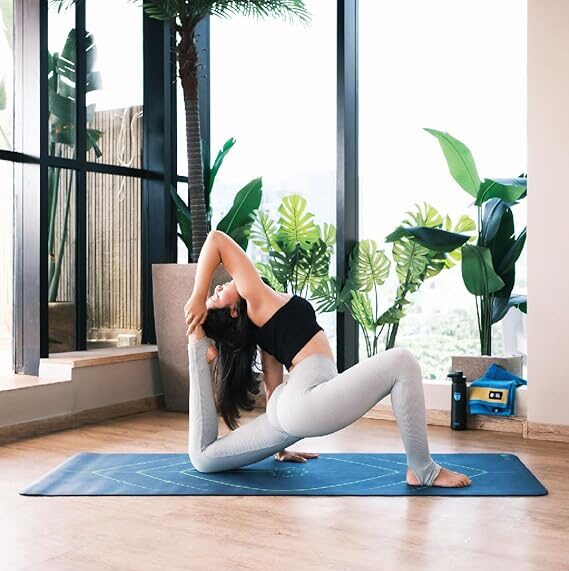
A yoga mat is more than a soft surface for stretching. The right mat can improve grip, cushion your joints, support balance, and make your practice more comfortable—whether you are a complete beginner, a daily Vinyasa practitioner, or someone who enjoys gentle stretching at home.
With hundreds of yoga mats available online, choosing one can feel confusing. This guide explains what to look for and highlights popular options for different budgets and practice styles.
Affiliate disclosure: This article may contain affiliate links. If you purchase through one of these links, we may earn a small commission at no additional cost to you. Our recommendations are based on features, use cases, published product information, and value—not on commission rates.
Quick Recommendations
| Best for | Recommended type | Why consider it |
|---|---|---|
| Beginners | 4–6 mm TPE or PVC mat | Comfortable, affordable, and versatile |
| Hot yoga | Natural rubber or polyurethane-top mat | Better traction when the practice becomes sweaty |
| Joint support | Dense 6 mm mat | More cushioning for knees, wrists, and hips |
| Balance poses | Firm 3–4.5 mm mat | Greater stability and less sinking |
| Eco-conscious buyers | Natural rubber or cork | Reduced reliance on conventional PVC |
| Travel | 1–2 mm foldable mat | Lightweight and easy to pack |
| Long-term investment | Premium dense rubber or PVC mat | Durable construction and stable support |
For most beginners, a mat between 4 and 6 mm offers a useful balance of cushioning and stability. Very thick mats may feel comfortable but can make balancing postures less stable.
Best Beginner Yoga Mat
Gaiam Premium 6 mm Yoga Mat
A 6 mm mat is a practical choice for new practitioners because it provides extra cushioning without being excessively soft. It can work well for home yoga, stretching, Pilates, and basic fitness routines.
Why consider it:
- Comfortable for knees and wrists.
- Suitable for beginners.
- Usually available at an accessible price.
- Easy to use for several types of exercise.
Independent testing guides have identified the Gaiam Premium 6 mm as a strong starter option for people who want comfort and value.
Best for: Beginners, home practice, and occasional yoga.
Affiliate CTA: Check the current price of a beginner-friendly 6 mm mat
Best Natural-Rubber Yoga Mat
JadeYoga Harmony
Natural rubber mats are popular because they often provide strong grip and a more substantial feel than basic foam mats. JadeYoga Harmony is frequently listed among well-known eco-conscious yoga mat options and is designed for practitioners who want traction during flowing sequences.thegoodtrade+1
Why consider it:
- Strong grip for Vinyasa-style practice.
- Natural-rubber construction.
- Firm, supportive feel.
- Suitable for regular home or studio use.
Important: Natural rubber may not be suitable for people with latex allergies. Check the manufacturer’s material information before purchasing.
Best for: Regular practitioners, Vinyasa, and buyers seeking a rubber mat.
Affiliate CTA: See the latest price and available colors
Best Premium Yoga Mat
Manduka PRO
The Manduka PRO is designed for practitioners who want a dense, durable mat for long-term use. It is heavier and less portable than many beginner mats, but its firm surface may provide excellent stability for standing poses and regular practice.
Why consider it:
- Dense cushioning.
- Stable surface for balance postures.
- Designed for frequent use.
- Premium construction.
Potential drawbacks:
- Higher initial cost.
- Heavier to carry.
- The surface may require a break-in period.
- Not ideal if you need a lightweight travel mat.
Best for: Dedicated practitioners who want to invest in one mat for years of use.
Affiliate CTA: Compare the Manduka PRO with other premium mats
Best Eco-Friendly Yoga Mat Materials
Natural Rubber
Natural rubber often provides good traction and a firm, supportive feel. It is a popular alternative to conventional PVC, although production and disposal still have environmental considerations.
Cork
Cork mats offer a distinctive natural surface. Some cork mats become grippier as moisture increases, making them appealing for sweaty practices. They may feel less cushioned than thick foam mats.
Jute and Plant Fibers
Jute and other plant-based materials may provide texture and breathability. They can feel more natural but may not be as soft or smooth as rubber, TPE, or PVC.
TPE
TPE mats are lightweight and often marketed as a more environmentally considerate alternative to PVC. They can be a reasonable option for beginners, although durability and grip vary by brand.
Eco-friendly claims are not always standardized. Look for specific information about materials, manufacturing, durability, packaging, and end-of-life disposal rather than relying only on words such as “green” or “natural.
Best Mat for Hot Yoga
Hot yoga requires a surface that remains stable when your hands and feet become sweaty. Natural rubber or a mat with a grippy polyurethane surface may be suitable choices.
Look for:
- Strong wet grip.
- A surface that can be cleaned frequently.
- Resistance to odor.
- Enough length for full-body poses.
- Compatibility with a yoga towel.
A towel can improve traction and protect the mat during very sweaty classes. Avoid choosing a mat only because it is soft; excessive cushioning may reduce stability during standing poses.
Best Yoga Mat for Joint Comfort
If your knees, wrists, hips, or back feel uncomfortable on a hard floor, consider a dense mat around 6 mm thick. You can also place a folded blanket beneath sensitive joints during kneeling poses.
A thicker mat is not always better. If the surface compresses too much, it may make balancing poses more difficult and can feel unstable during transitions.
A good comfort-focused mat should offer:
- Dense rather than spongy cushioning.
- A non-slip bottom.
- A surface that does not bunch or fold.
- Enough width for comfortable movement.
Best Travel Yoga Mat
Travel mats are usually thinner and lighter than standard mats. They are convenient for holidays, work trips, and placing over a studio mat, but they provide less cushioning.
Choose a travel mat if you value:
- Low weight.
- Foldability.
- Small packed size.
- Easy storage.
For regular home practice, a standard 4–6 mm mat is generally more comfortable. A travel mat works best when portability is more important than cushioning.
How to Choose the Right Thickness
| Thickness | Best use | Advantages | Limitations |
|---|---|---|---|
| 1–2 mm | Travel | Very light and portable | Limited joint cushioning |
| 3–4.5 mm | Balance and flowing yoga | Stable and easy to carry | Less comfort on hard floors |
| 5–6 mm | General practice | Good balance of support and comfort | Slightly heavier |
| 7 mm or more | Comfort and floor exercise | Extra cushioning | May feel unstable for balance |
For a general-purpose mat, 4–6 mm is often the most practical range. If you practice mostly meditation or gentle floor poses, comfort may matter more than stability. If you practice standing balances or fast transitions, choose a firmer surface.
Material Comparison
| Material | Grip | Cushioning | Durability | Best for |
|---|---|---|---|---|
| PVC | Good to very good | Good | Often high | Affordable general practice |
| TPE | Moderate to good | Moderate | Varies | Beginners and light use |
| Natural rubber | Very good | Moderate to good | High with proper care | Vinyasa and regular practice |
| Cork | Moderate when dry, often better with moisture | Low to moderate | Good | Hot yoga and eco-conscious buyers |
| Cotton or jute | Moderate | Low | Varies | Traditional or textured feel |
No single material is ideal for everyone. Grip, comfort, allergies, odor sensitivity, budget, and environmental priorities should all influence your decision.
Features Worth Paying For
Non-slip grip
A secure surface helps you hold Downward-Facing Dog, Plank, Warrior poses, and balance postures with greater confidence.
Good alignment of texture and support
A mat should not bunch, curl, or slide across the floor. A stable base is especially important during flowing practices.
Sufficient length
Standard mats may feel short for taller practitioners. If you are tall or enjoy lying fully extended in Savasana, consider an extra-long mat.
Easy cleaning
Choose a surface that can be wiped down regularly. Follow the manufacturer’s cleaning instructions, especially for natural rubber mats.
Low odor
Some new mats have a noticeable manufacturing smell. Airing the mat out before use may help, but people sensitive to odors should check reviews and material details carefully.
Carrying options
A strap or carrying case is useful if you travel to classes. Heavy premium mats may need a stronger strap or dedicated carrier.
Common Buying Mistakes
Choosing the thickest mat available
Extra thickness does not automatically mean better support. A dense 5 mm mat may feel more stable than a soft 8 mm mat.
Ignoring sweat levels
A mat that feels grippy during a dry practice may become slippery during hot yoga. Consider your practice temperature and whether you use a towel.
Buying based only on appearance
A beautiful design cannot compensate for poor grip, weak durability, or an unsuitable thickness.
Forgetting allergies
Natural rubber mats may contain latex. If you have a latex allergy, look for a latex-free alternative and verify the product specifications.
Not measuring your practice space
Check the mat’s length and width before purchasing. Extra-wide or extra-long mats may be more comfortable but require more storage space.
How to Care for Your Yoga Mat
Extend the life of your mat by:
- Wiping it after sweaty sessions.
- Using a mild, manufacturer-approved cleaning solution.
- Allowing it to dry fully before rolling.
- Keeping it away from prolonged direct sunlight.
- Storing it loosely rolled rather than sharply folded, unless it is designed to fold.
- Avoiding shoes on the surface.
- Replacing it when it loses grip, flakes, cracks, or slides during practice.
Natural-rubber mats may require special care and should not be cleaned with harsh chemicals unless the manufacturer recommends them.
Final Buying Advice
If you are buying your first yoga mat, choose a 4–6 mm option with reliable grip, moderate cushioning, and a non-slip base. A budget TPE, PVC, or basic rubber mat is usually sufficient while you discover your preferred yoga style.
If you practice frequently, sweat heavily, or want a long-term investment, consider a natural-rubber or premium dense mat. Eco-conscious shoppers should investigate the specific material and manufacturing claims rather than choosing a product based only on its marketing language.
The best yoga mat is the one that suits your practice, floor, body, budget, and habits—and encourages you to step onto it consistently.
Affiliate CTA: Best Yoga Mat Brands Available on Amazon India