
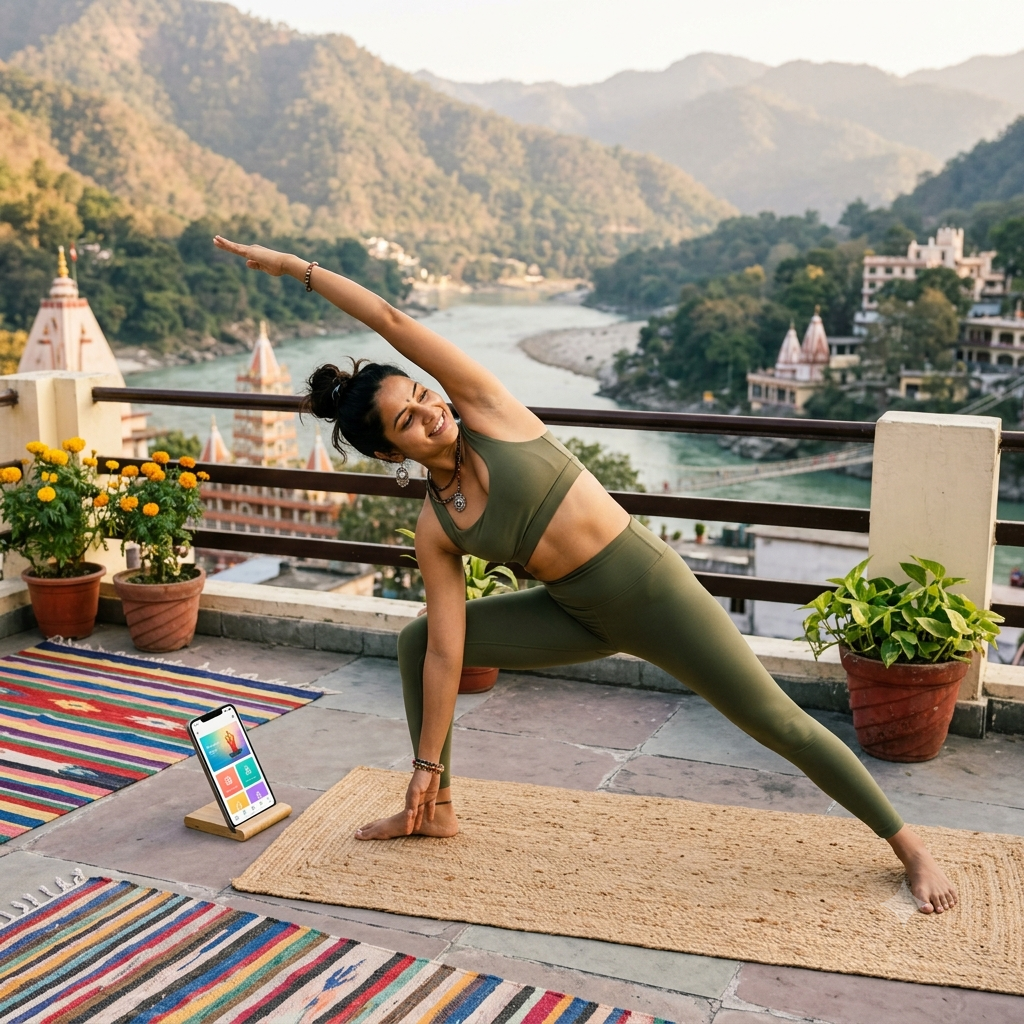
Yoga apps have made it easier for people in India to practise at home, while travelling, or between work and family responsibilities. Instead of attending a studio at a fixed time, users can choose short sessions, guided classes, meditation, breathing exercises, and personalised programmes from a smartphone.
Popular apps available to Indian users include Daily Yoga, Down Dog, Simply Yoga, Asana Rebel, Pocket Yoga, 5 Minute Yoga, Universal Breathing, and Yoga Studio. Indian-focused platforms such as YogiFi and SARVA also offer structured or guided yoga experiences for home users.play.google+2
What Is a Yoga App?
A yoga app is a mobile application that provides guided yoga content through videos, audio instructions, written lessons, or interactive programmes. Depending on the platform, it may include:
- Beginner and advanced yoga classes.
- Short routines for busy schedules.
- Breathing and pranayama sessions.
- Meditation and relaxation exercises.
- Personalised plans.
- Progress tracking.
- Live classes with instructors.
- Hindi, English, or other language options.
- Free and paid subscription plans.
Some apps are simple video libraries, while others work more like digital yoga teachers by recommending sessions according to your goals, experience, and available time.
Best Yoga Apps for Users in India
1. YogiFi
Best for personalised yoga guidance
Explore YogiFi
YogiFi is an India-based yoga platform that aims to connect yoga students with guided programmes and trainers. Its listed programmes are curated by certified yoga teachers and can include daily schedules based on the user’s goals and limitations.
The app may be useful for:
- Beginners who need a structured routine.
- Busy professionals who want scheduled sessions.
- Users looking for yoga, stretching, breathing, and meditation.
- Practitioners who prefer guided progression rather than random videos.
YogiFi also offers connected products such as a smart yoga mat designed to provide guided classes and posture-related feedback through the app.
2. SARVA Yoga
Best for live coaching and home practice
Visit SARVA Yoga
SARVA provides yoga sessions from instructors and offers home-based practice options. Its official site describes guided workouts, live personal training, pre-recorded classes, and goal-oriented sessions.sarva+1
It may suit users who want:
- Live interaction with teachers.
- A more formal class structure.
- Regular weekly sessions.
- Home practice without travelling to a studio.
- Guidance from Indian yoga coaches.
Before joining, check the current trial terms, pricing, class schedule, cancellation rules, and whether the available plan matches your preferred language and time zone.
3. Daily Yoga
Best for a large variety of guided routines
Check Daily Yoga on Google Play
Daily Yoga includes guided yoga and meditation content for different practice levels. It can be useful for users who want to switch between flexibility sessions, strength-focused routines, relaxation, and short daily classes.
Its main uses include:
- Following a daily yoga habit.
- Choosing classes by duration.
- Combining yoga with meditation.
- Practising at home or while travelling.
- Exploring different styles before committing to a studio.
Check which content is available for free and which sessions require a subscription.
4. Down Dog
Best for customised sessions
Explore Down Dog on Google Play
Down Dog is often recommended for users who want to customise their yoga session rather than follow the same fixed video every time. Users can typically adjust factors such as session duration, level, focus, and practice style, depending on the current app plan.
This can be useful for:
- People with changing schedules.
- Travellers who want short sessions.
- Intermediate users who prefer variety.
- Practitioners who want to repeat a favourite format with different routines.
Always confirm current pricing and available features in the Indian app store before subscribing.
5. 5 Minute Yoga
Best for very short routines
Search for 5 Minute Yoga apps
Short yoga apps are designed for users who struggle to find 30–60 minutes for a complete session. A five-minute routine can be used for morning movement, a work break, gentle stretching, or a simple wind-down routine.
This type of app may work well for:
- Office workers.
- Beginners who feel intimidated by long classes.
- Frequent travellers.
- People building a daily habit.
- Users who prefer simple, focused sessions.
Short sessions are convenient, but they should not be treated as a substitute for professional care when you have an injury or medical condition.
Main Uses of Yoga Apps in India
Practising at home
Yoga apps allow users to practise without commuting to a studio. This can be especially convenient for people in cities with long travel times, parents with limited schedules, and users who prefer privacy while learning.
A phone, enough floor space, and a suitable mat may be all that is required for many beginner sessions.
Learning yoga as a beginner
Beginners can use apps to understand basic poses, breathing instructions, warm-ups, and cool-downs. Guided video demonstrations may also make it easier to follow the order of a routine.
However, beginners should choose slow, clearly explained classes instead of immediately starting advanced flexibility or balance sessions.
Supporting a regular routine
One of the main uses of an app is consistency. Reminders, schedules, streaks, and progress features can encourage users to practise regularly instead of relying on motivation alone.
A realistic routine could begin with 10 minutes three or four times a week and gradually increase according to comfort and experience.
Practising in regional and familiar contexts
Indian users may prefer instructors, examples, schedules, and language options that feel familiar. Some apps provide English and Hindi content, while others may offer limited regional-language support.
Before subscribing, check the exact language of voice instructions, captions, customer support, and meditation content. Do not assume that an app available in India automatically offers Hindi or other Indian languages.
Learning pranayama and meditation
Many yoga apps include breathing exercises, guided relaxation, mindfulness sessions, and meditation. These features can make an app useful beyond physical postures.
Users should approach advanced breath retention, rapid breathing, or therapeutic claims cautiously. People with health concerns should consult a qualified healthcare professional before starting intensive breathing practices.
Practising while travelling
A mobile app can turn a hotel room, holiday rental, or quiet outdoor space into a temporary practice area. Downloadable classes or low-data options are particularly useful when travelling with unreliable internet access.
A foldable travel mat, yoga strap, and small towel can complement an app-based routine.
Joining live online classes
Some Indian yoga platforms offer live sessions with instructors. Live classes can provide more structure and accountability than pre-recorded videos.
Before booking, check:
- Class timings.
- Instructor qualifications.
- Whether the class is one-to-one or group-based.
- Cancellation and refund policies.
- Whether recordings are included.
- Whether the instructor can offer modifications.
Free vs Paid Yoga Apps
| Feature | Free app | Paid app |
|---|---|---|
| Basic sessions | Often available | Usually broader selection |
| Personalisation | Limited | More detailed options |
| Live classes | Less common | More likely |
| Progress tracking | Basic or absent | Often included |
| Advertisements | More likely | May be reduced or absent |
| Offline access | May be limited | More commonly available |
| Instructor support | Usually limited | May include coaching or feedback |
A free version is usually enough to test the teaching style, video quality, language, and app experience. Consider paying only after you have confirmed that you will use the app regularly.
How to Choose the Right Yoga App
Choose by your goal
- Beginner learning: Look for slow classes and pose explanations.
- Flexibility: Choose sessions with warm-ups and progressive levels.
- Stress management: Look for meditation, relaxation, and gentle yoga.
- Weight-management support: Choose general movement and fitness guidance, but avoid unrealistic promises.
- Busy schedule: Select apps with 5-, 10-, or 15-minute classes.
- Personal coaching: Look for live classes or instructor feedback.
- Travel: Prioritise offline access and low-data features.
Check the instructor and content quality
A polished interface does not automatically mean high-quality yoga instruction. Look for transparent instructor information, clear demonstrations, modification options, and safety guidance.
Avoid apps that promise instant cures, guaranteed weight loss, or medical treatment through yoga alone.
Review privacy and subscription terms
Before creating an account, review the permissions requested by the app and read the subscription details. Pay attention to auto-renewal, trial-period conditions, cancellation instructions, and refund policies.
Are Yoga Apps Safe for Beginners?
Yoga apps can be useful for beginner practice, but a recorded video cannot see every movement or correct every mistake. Start with beginner-level classes, move slowly, avoid forcing stretches, and stop if you experience sharp pain, dizziness, numbness, or unusual discomfort.
If you are pregnant, recovering from an injury, managing a medical condition, or unsure whether yoga is appropriate for you, seek advice from a qualified healthcare professional or experienced yoga instructor before beginning.
Final Recommendation
For Indian users, YogiFi is worth considering for structured and personalised programmes, while SARVA may suit people who prefer live coaching and guided home classes. Daily Yoga and Down Dog are useful alternatives for users who want a broad range of guided or customisable sessions.
The best yoga app is not necessarily the one with the largest content library. Choose the app that matches your language, schedule, experience level, budget, instructor preference, and willingness to practise consistently.