
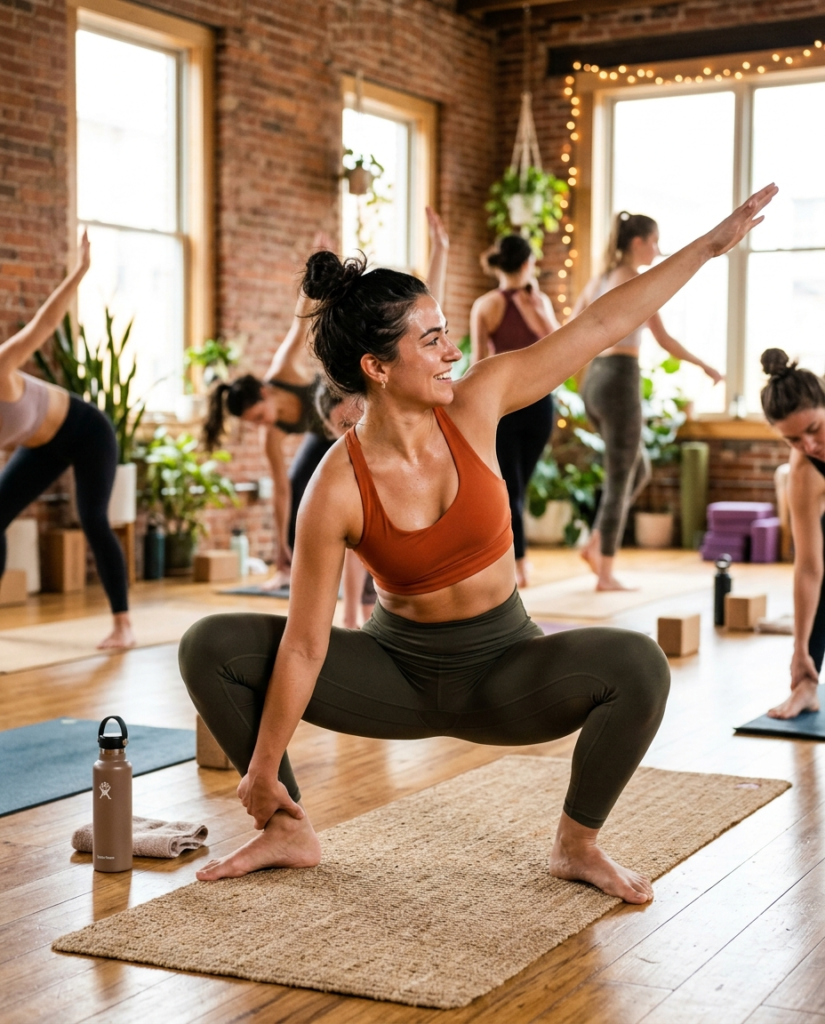
Yoga is often associated with flexibility, relaxation, and meditation—but it can also support a healthy fat-loss journey. While yoga may not burn as many calories as vigorous cardio, regular practice can increase physical activity, build strength, reduce stress, improve body awareness, and encourage more mindful eating habits.
Research reviewed by the National Center for Complementary and Integrative Health suggests that yoga may contribute to gradual reductions in body weight, body-mass index, body fat, and waist circumference. The most effective approach is to combine yoga with balanced nutrition, adequate sleep, regular movement, and realistic long-term habits.
Can Yoga Help You Lose Fat?
Fat loss occurs when the body uses more energy than it receives over time. Yoga can support this process in several ways:
- Dynamic yoga styles increase movement and energy expenditure.
- Strength-building poses help develop and maintain muscle.
- Mindfulness may reduce emotional or distracted eating.
- Stress management can make healthy habits easier to maintain.
- Improved flexibility and mobility may help you stay active.
- Relaxation practices can support better sleep and recovery.
Yoga alone may lead to modest weight loss, especially when practiced gently or infrequently. However, studies indicate that yoga can be a useful part of a broader weight-management program, and both restorative Hatha yoga and Vinyasa yoga have been studied as practical options.
Best Yoga Styles for Fat Loss
Vinyasa Yoga
Vinyasa links movement with breath in a continuous flow. Repeated transitions between poses can raise your heart rate while improving strength, balance, and coordination.
Best for: People who enjoy movement and want a moderate-to-vigorous practice.
Power Yoga
Power Yoga is a more athletic style that may include challenging standing poses, balances, planks, and core work.
Best for: Practitioners who already have some yoga experience and want a stronger workout.
Ashtanga Yoga
Ashtanga follows a structured sequence of postures performed in a consistent order. It can be physically demanding and requires concentration, strength, and stamina.
Best for: Those who enjoy discipline, routine, and progressive training.
Hatha Yoga
Traditional Hatha classes are often slower, but they can still build strength and improve mobility. A slower practice may also help beginners develop the foundation needed for more vigorous sessions.
Best for: Beginners, people returning to exercise, or anyone who prefers a balanced pace.
Restorative Yoga
Restorative Yoga is not designed as a high-calorie-burning workout. However, it may support fat-loss goals indirectly by reducing stress, improving relaxation, and encouraging mindful lifestyle choices.
Best for: Recovery days, stress management, and complementing more active workouts.
Yoga Poses That Support Fat Loss
The following poses can be combined into a strength-focused sequence. Move with control, breathe steadily, and prioritize proper alignment over speed.
1. Chair Pose — Utkatasana
Chair Pose strengthens the thighs, glutes, hips, and core.
How to practice:
- Stand with your feet together or hip-width apart.
- Bend your knees and move your hips back as if sitting in a chair.
- Keep your chest lifted and weight balanced through your heels.
- Raise your arms overhead or extend them forward.
- Hold for 20–40 seconds.
2. Plank Pose — Phalakasana
Plank builds strength throughout the arms, shoulders, abdomen, back, and legs.
How to practice:
- Begin on your hands and knees.
- Step both feet back and create a straight line from your head to your heels.
- Engage your abdomen and avoid dropping your hips.
- Hold for 15–30 seconds.
Modification: Lower your knees to the mat while keeping your spine long.
3. Boat Pose — Navasana
Boat Pose targets the abdominal muscles and hip flexors while challenging balance.
How to practice:
- Sit with your knees bent and feet on the floor.
- Lean back slightly while keeping your spine long.
- Lift your feet and balance on your sitting bones.
- Extend your arms forward.
- Hold for 10–20 seconds, rest, and repeat.
4. Warrior II — Virabhadrasana II
Warrior II activates the legs and hips while improving stamina and stability.
How to practice:
- Step your feet wide apart.
- Turn your front foot outward and bend the front knee.
- Extend your arms in opposite directions.
- Keep the front knee aligned with the ankle.
- Hold for 5–8 breaths on each side.
5. High Lunge
High Lunge strengthens the legs, glutes, and core while increasing balance and coordination.
How to practice:
- Step one foot forward between your hands.
- Keep the back heel lifted.
- Bend the front knee and stack it above the ankle.
- Lift your torso and reach your arms overhead.
- Hold for 5 breaths before switching sides.
6. Chair Twist
Chair Twist adds rotational movement and challenges the legs and core.
How to practice:
- Begin in Chair Pose.
- Bring your palms together at your chest.
- Rotate your torso and place the opposite elbow outside the front knee.
- Keep both knees level.
- Hold for 3–5 breaths on each side.
Avoid forcing the twist or collapsing the chest.
7. Locust Pose — Salabhasana
Locust Pose strengthens the back body, including the spine, glutes, and hamstrings.
How to practice:
- Lie on your stomach with your arms alongside your body.
- Engage your legs and gently lift your chest, arms, and legs.
- Keep your neck long and gaze slightly forward.
- Hold for 10–20 seconds.
- Repeat two or three times.
8. Sun Salutations — Surya Namaskar
Sun Salutations combine several poses into a flowing sequence. They can warm up the body, improve mobility, and raise the heart rate when practiced continuously.healthline
A basic round may include:
- Mountain Pose.
- Standing Forward Fold.
- Half Lift.
- Plank.
- Knees-Chest-Chin or Chaturanga.
- Cobra or Upward-Facing Dog.
- Downward-Facing Dog.
- Forward Fold.
- Mountain Pose.
Beginners can move slowly and take a breath in each position. More experienced practitioners may repeat the sequence at a faster but controlled pace.
A 30-Minute Yoga Routine
Try this routine three to five days per week, adjusting the intensity to your fitness level.
Warm-up — 5 minutes
- Easy seated breathing.
- Cat-Cow stretches.
- Downward-Facing Dog.
- Gentle standing side bends.
Strength flow — 15 minutes
- Three to five rounds of Sun Salutations.
- Chair Pose for 30 seconds.
- Warrior II for 5 breaths per side.
- High Lunge for 5 breaths per side.
- Plank for 20 seconds.
- Boat Pose for 15 seconds.
- Rest briefly and repeat.
Cool-down — 10 minutes
- Low Lunge.
- Seated Forward Fold.
- Supine twist.
- Child’s Pose.
- Savasana.
For additional cardiovascular activity, combine yoga with brisk walking, cycling, swimming, or another form of exercise you enjoy. Yoga can complement these activities rather than replace every other type of movement.
How Often Should You Practice?
Consistency matters more than occasional intense sessions. A practical weekly plan might look like this:
| Day | Activity |
|---|---|
| Monday | 30-minute Vinyasa or strength-focused yoga |
| Tuesday | Brisk walk and light stretching |
| Wednesday | 20–30-minute yoga routine |
| Thursday | Restorative yoga or rest |
| Friday | Power Yoga or Sun Salutation practice |
| Saturday | Walking, cycling, or another enjoyable activity |
| Sunday | Gentle yoga, mobility work, or rest |
Start with two or three yoga sessions each week if you are new to exercise. Gradually increase duration and intensity as your body adapts.
Yoga and Nutrition
Yoga cannot compensate for an eating pattern that consistently provides more energy than your body needs. For sustainable fat loss, focus on nutritious meals that include:
- Protein sources such as beans, lentils, eggs, yogurt, fish, poultry, or tofu.
- Fiber-rich vegetables, fruits, whole grains, and legumes.
- Healthy fats from nuts, seeds, avocado, and olive oil.
- Adequate water throughout the day.
- Fewer highly processed foods and sugary drinks.
Avoid extreme diets or severe calorie restriction. A gradual approach is more likely to support energy, recovery, and long-term consistency.
Common Mistakes to Avoid
Expecting Spot Reduction
Yoga poses can strengthen and tone specific muscle groups, but they cannot selectively remove fat from the abdomen, hips, thighs, or arms. Fat loss occurs throughout the body according to individual biology.
Choosing Intensity Over Consistency
The hardest class is not always the best class. A moderate practice that you can perform regularly is usually more useful than an exhausting session that causes pain or discourages you.
Ignoring Strength and Cardio
Yoga is valuable, but combining it with walking, aerobic activity, or resistance training may provide a more complete fitness program.
Treating Sweating as Proof of Fat Loss
Sweat mainly reflects the body’s cooling process. Hot yoga may make you sweat more, but temporary water loss is not the same as losing body fat.
Safety Tips:
Warm up before challenging poses, use modifications when needed, and stop if you feel sharp pain, dizziness, chest discomfort, or unusual shortness of breath. If you are pregnant, recovering from an injury, or managing a medical condition, consult a qualified healthcare professional or experienced yoga teacher before starting a vigorous practice.
Final Thoughts
Yoga can support fat loss, but its greatest value may extend beyond calorie burning. By building strength, improving mobility, reducing stress, and encouraging mindful choices, yoga can help create habits that are easier to maintain.
For the best results, practice consistently, eat nourishing foods, include other forms of physical activity, and measure progress through energy, strength, mobility, sleep, and overall well-being—not only the number on the scale.