
In an age of constant notifications and multitasking, the ability to focus is both rare and invaluable. Yoga offers a time-tested toolkit—not just poses, but breathwork, gaze techniques, and mindful awareness—to calm mental chatter, boost clarity, and train sustained attention.
Below is a concise, evidence-informed guide to the most effective yoga techniques for improving focus, suitable for students, professionals, and anyone seeking a sharper, steadier mind.
Why Yoga Works for Focus
Yoga improves concentration through three interconnected pathways:
- Physiological: Balances the nervous system, reduces cortisol (stress hormone), and increases oxygen flow to the brain.
- Attentional: Practices like drishti (fixed gaze) and balancing poses require single-pointed awareness, training the brain’s “focus muscle.
- Energetic: Breathwork (pranayama) clears mental fog by regulating prana (life force), especially through techniques like Nadi Shodhana that harmonize brain hemispheres.
Research and traditional texts agree: consistent yoga practice enhances memory, reduces distractions, and supports cognitive resilience.
Top 5 Yoga Poses (Asanas) for Mental Clarity
These poses are selected for their ability to ground the body, open the chest and spine, and demand present-moment awareness.
1. Tree Pose (Vrikshasana)
A classic balancing pose that requires unwavering focus on a fixed point (drishti).
How it helps: Trains concentration, improves posture, and calms the mind through micro-adjustments in balance.
Tip: Gaze softly at a spot 3–5 feet ahead. If you wobble, smile—it’s part of the practice.
2. Warrior III (Virabhadrasana III)
A dynamic balance pose where the body forms a straight line, parallel to the floor.
How it helps: Builds core strength while demanding full sensory engagement—ideal for anchoring a scattered mind.
Modification: Use a wall or chair for support until stability improves.
3. Downward-Facing Dog (Adho Mukha Svanasana)
An inversion that gently increases blood flow to the brain and relieves neck/shoulder tension.
How it helps: Energizes the brain, reduces fatigue, and creates mental space for clarity.
Cue: Press hands firmly, lift hips high, and breathe deeply into the back body.
4. Child’s Pose (Balasana)
A restorative forward fold that signals safety to the nervous system.
How it helps: Reduces anxiety, grounds awareness, and prepares the mind for deeper focus work.
Use it: As a reset between intense tasks or before meditation.
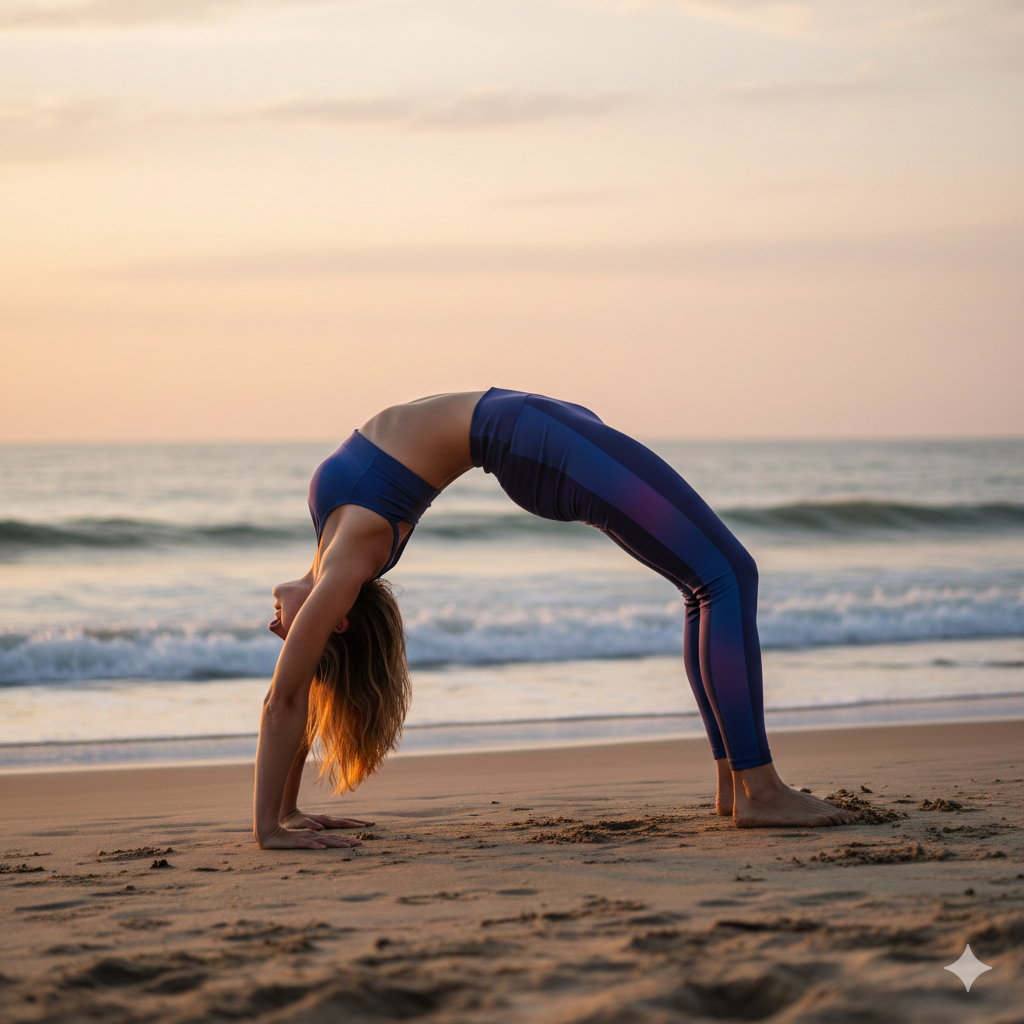
5. Bridge Pose (Setu Bandhasana)
A gentle backbend that opens the chest and stimulates the thyroid.
How it helps: Improves mood, regulates hormones linked to cognition, and counters mental sluggishness.
Hold: 30–60 seconds with slow, even breaths.
🪷 Pro tip: Sequence these as: Balasana → Down Dog → Warrior III → Tree → Bridge → seated breathwork.
Breathwork (Pranayama) to Clear Brain Fog
Breath is the fastest route to a focused mind. Try these three techniques daily:
Nadi Shodhana (Alternate Nostril Breathing)
Balances left/right brain activity and calms the sympathetic (stress) response.
How to:
- Sit comfortably, spine tall.
- Close right nostril with thumb, inhale left (4 counts).
- Close left nostril, exhale right (4 counts).
- Inhale right (4), close, exhale left (4).
- Repeat 5–10 rounds.
Bhramari (Humming Bee Breath)
Vibrations from humming stimulate the vagus nerve, reducing mental tension and enhancing concentration.
How to:
- Inhale deeply, then exhale while making a soft “hmmmm” sound (like a bee).
- Close ears gently with thumbs to amplify resonance.
- Repeat 5–7 times.
Ujjayi (Victorious Breath)
Creates a rhythmic, oceanic sound that anchors attention and activates the parasympathetic system.
How to:
- Slightly constrict the throat (as if fogging a mirror) on both inhale and exhale.
- Match breath length (e.g., 4 in, 4 out) for 2–5 minutes.⚠️ Avoid Kapalabhati (rapid bellows breath) if you’re anxious, pregnant, or have high blood pressure—opt for calming breaths first.
The Secret Weapon: Drishti (Gaze Focus)
Drishti—a soft, steady gaze on a single point—is used in balancing poses and meditation to prevent mental wandering.
How to apply it off the mat:
- While working, choose a neutral focal point (e.g., corner of your screen, a plant).
- Every 20 minutes, pause, soften your eyes, and rest your gaze there for 30 seconds while breathing deeply.
- This “micro-reset” mimics yogic dharana (concentration) and reduces digital eye strain.
Bonus: Trataka (Candle Gazing) for Deep Concentration
A classical shatkarma (cleansing) practice to strengthen visual focus and inner stillness.
How to:
- Light a candle at eye level, 2–3 feet away.
- Sit comfortably, spine erect.
- Gaze softly at the flame’s tip—no blinking if possible (but blink naturally if needed).
- After 1–2 minutes, close eyes and visualize the flame at your third eye (between eyebrows).
- Repeat 2–3 rounds.
Benefits: Enhances memory, reduces mental fatigue, and prepares the mind for meditation.
A 10-Minute Daily Focus Routine
| Time | Practice | Purpose |
|---|---|---|
| 0–2 min | Balasana + deep belly breaths | Ground & calm |
| 2–5 min | Nadi Shodhana (5 rounds) | Balance brain hemispheres |
| 5–7 min | Tree Pose (30 sec each side) + drishti | Train single-pointed focus |
| 7–9 min | Bhramari (5 rounds) | Release mental tension |
| 9–10 min | Seated silence, hands in Chin Mudra | Integrate clarity |
Do this before work, study, or whenever you feel mentally scattered.
Science-Backed Benefits
- A 2024 review found yoga significantly improves attention, working memory, and executive function—especially with consistent practice (3+ times/week).
- Balancing poses increase activation in the prefrontal cortex, the brain’s “CEO” for focus and decision-making.
- Nadi Shodhana reduces heart rate variability and subjective stress within minutes, creating optimal conditions for deep work.
Final Thought
Yoga doesn’t promise a distraction-free mind—it teaches you to return, again and again, with kindness and curiosity. Every time you notice your attention drift and gently bring it back (to breath, to pose, to task), you’re strengthening neural pathways for resilience.
Start small. One pose. One breath. One moment of true presence.