
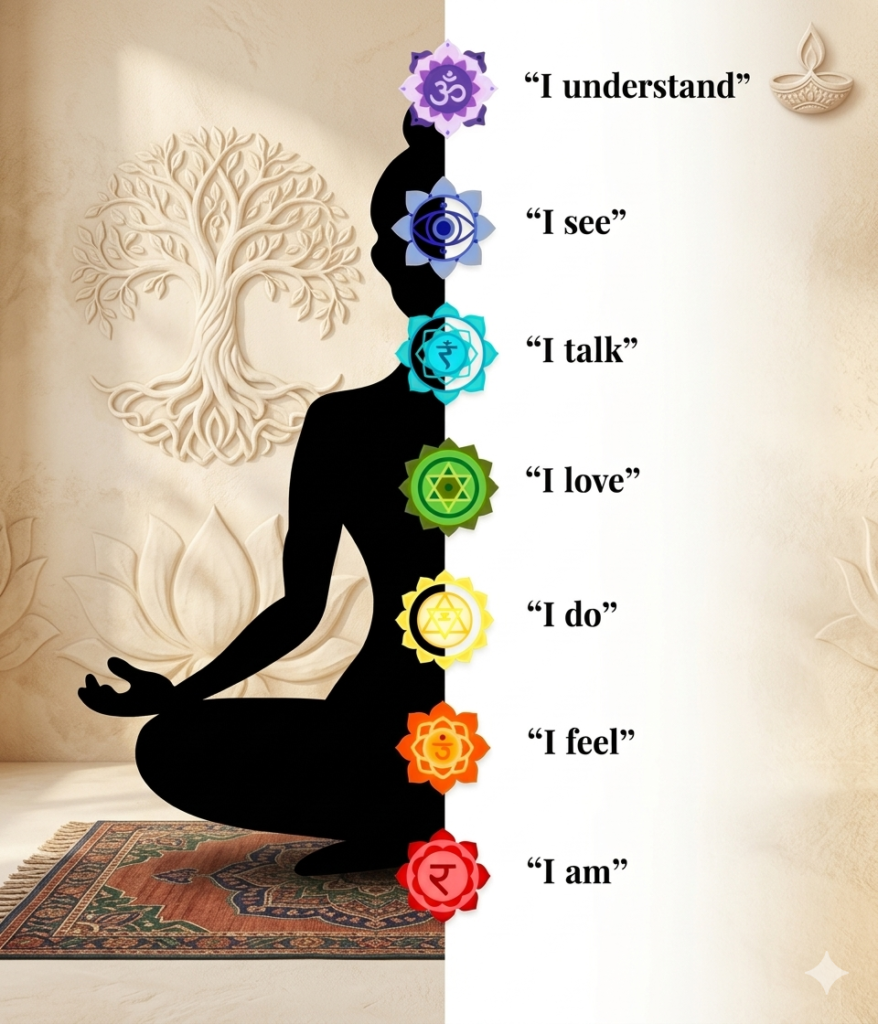
In yoga and tantric traditions, the seven chakras are subtle energy centers aligned along the spine—from the base to the crown of the head—that influence physical, emotional, and spiritual well-being. When balanced, they support clarity, vitality, and inner harmony; when blocked or overactive, they can manifest as stress, insecurity, or disconnection.
Below is a clear, practical overview of each chakra—its location, meaning, signs of imbalance, and simple ways to bring it into balance through yoga, breath, and mindful living.
What Are Chakras?
The word chakra (Sanskrit: चक्र) means “wheel” or “disk,” symbolizing the spinning vortexes of energy that regulate life force (prana) throughout the body. According to yogic philosophy, these centers lie along the central energy channel (sushumna nadi) and correspond to nerve plexuses, endocrine glands, emotional themes, colors, sounds (bija mantras), and elements.
Think of chakras as internal control panels: each one governs specific aspects of your being. Working with them isn’t about “fixing” yourself—it’s about tuning in, noticing patterns, and gently restoring flow.
The Seven Main Chakras
| Chakra (Sanskrit) | Common Name | Location | Element | Color | Key Themes |
|---|---|---|---|---|---|
| Muladhara | Root | Base of spine (tailbone/perineum) | Earth | Red | Safety, grounding, survival, physical vitality |
| Svadhisthana | Sacral | Lower abdomen (below navel, sacrum) | Water | Orange | Creativity, pleasure, emotions, relationships |
| Manipura | Solar Plexus | Upper abdomen (navel area) | Fire | Yellow | Confidence, willpower, digestion, personal power |
| Anahata | Heart | Center of chest | Air | Green (sometimes pink) | Love, compassion, forgiveness, emotional openness |
| Vishuddha | Throat | Throat and neck | Ether (Space) | Blue | Truth, communication, self-expression |
| Ajna | Third Eye | Between eyebrows (forehead) | Light | Indigo | Intuition, insight, mental clarity, inner vision |
| Sahasrara | Crown | Top of head | Thought/Consciousness | Violet/White/Gold | Spiritual connection, unity, transcendence |
Chakra by Chakra: Meaning, Imbalance & Balance
1. Muladhara (Root Chakra)
Location: Base of the spine
Mantra: LAM
What it governs: Your sense of safety, stability, and connection to the earth and body.
Signs of imbalance: Anxiety, financial insecurity, fatigue, feeling “ungrounded” or disconnected from your body.
How to balance:
- Yoga poses: Mountain Pose (Tadasana), Warrior I & II (Virabhadrasana), Tree Pose (Vrksasana), Child’s Pose (Balasana)
- Breath: Slow, deep belly breathing; grounding pranayama like Dirga Swasam
- Lifestyle: Walk barefoot on grass, declutter your space, eat root vegetables, practice financial mindfulnessTip: If you feel scattered or unsafe, start here. A strong root supports all higher chakras.
2. Svadhisthana (Sacral Chakra)
Location: Lower abdomen, just below the navel
Mantra: VAM
What it governs: Creativity, sensuality, emotional flow, and healthy relationships.
Signs of imbalance: Emotional numbness, creative blocks, guilt around pleasure, relationship turbulence, or addictive tendencies.
How to balance:
- Yoga poses: Goddess Pose (Utkata Konasana), Hip openers like Pigeon Pose (Eka Pada Rajakapotasana), Baddha Konasana (Bound Angle)
- Breath: Fluid, wave-like breath; alternate nostril breathing (Nadi Shodhana)
- Lifestyle: Dance, journal emotions, create art, honor your needs without shameNote: This chakra thrives on movement and authentic feeling—not suppression.
3. Manipura (Solar Plexus Chakra)
Location: Upper abdomen, around the navel
Mantra: RAM
What it governs: Personal power, self-esteem, digestion, and will.habuild+1
Signs of imbalance: Low confidence, digestive issues, people-pleasing, perfectionism, or controlling behavior.
How to balance:
- Yoga poses: Navasana (Boat Pose), Bhujangasana (Cobra), Dhanurasana (Bow), core-focused flows
- Breath: Ujjayi breath; Kapalabhati (with caution and guidance)
- Lifestyle: Set small, achievable goals; eat mindfully; say “no” when neededInsight: A balanced Manipura helps you act from inner authority—not fear or external validation.
4. Anahata (Heart Chakra)
Location: Center of the chest
Mantra: YAM
What it governs: Love (for self and others), compassion, forgiveness, and emotional resilience.
Signs of imbalance: Loneliness, resentment, difficulty trusting, or over-giving to earn love.
How to balance:
- Yoga poses: Camel Pose (Ustrasana), Fish Pose (Matsyasana), heart-opening backbends, Anahatasana (Puppy Pose)
- Breath: Gentle pranayama with extended exhales; loving-kindness (Metta) meditation
- Lifestyle: Practice gratitude, volunteer, nurture friendships, forgive (yourself first)Remember: The heart chakra bridges the lower (physical) and upper (spiritual) chakras—it’s the gateway to empathy.
5. Vishuddha (Throat Chakra)
Location: Throat and neck
Mantra: HAM
What it governs: Authentic expression, honest communication, and listening deeply.
Signs of imbalance: Fear of speaking up, chronic sore throat, dominating conversations, or inability to articulate needs.
How to balance:
- Yoga poses: Bridge Pose (Setu Bandhasana), Lion’s Breath (Simhasana), neck rolls, Shoulder Stand (Sarvangasana—with caution)
- Breath: Chanting HAM or humming (Bhramari bee breath)
- Lifestyle: Sing, write poetry, speak your truth kindly, practice active listeningKey: Truth isn’t just what you say—it’s how and why you say it.
6. Ajna (Third Eye Chakra)
Location: Between the eyebrows, forehead
Mantra: OM (or silence)
What it governs: Intuition, inner wisdom, mental clarity, and the ability to see beyond illusions.
Signs of imbalance: Overthinking, brain fog, cynicism, or ignoring gut feelings.
How to balance:
- Yoga poses: Forward folds (Paschimottanasana), Child’s Pose, Eagle Pose (Garudasana), gentle inversions
- Breath/Meditation: Trataka (candle gazing), silence practice, reduce screen time before bed
- Lifestyle: Keep a dream journal, spend time in nature, ask: “What does my inner voice say?”Wisdom: Ajna isn’t about “seeing the future”—it’s trusting your inner guidance now.
7. Sahasrara (Crown Chakra)
Location: Top of the head
Mantra: Silence (or NG sound in some traditions)
What it governs: Spiritual connection, unity consciousness, transcendence, and inner peace.
Signs of imbalance: Feeling spiritually disconnected, existential dread, or rigid dogma.
How to balance:
- Yoga poses: Lotus Pose (Padmasana), Headstand (Sirsasana—advanced), Savasana with awareness
- Meditation: Silent sitting, Yoga Nidra, contemplative inquiry (“Who am I?”)
- Lifestyle: Study wisdom texts, practice humility, serve without expectationNote: Sahasrara opens naturally when the lower six chakras are relatively balanced—no forcing required.
How to Work with the Chakras in Daily Life
You don’t need to “activate” all seven at once. Start with self-observation:
- Where do you feel tension? (e.g., tight jaw → throat; knot in stomach → solar plexus)
- What patterns repeat? (e.g., people-pleasing → heart/throat; chronic fatigue → root)
- Which area feels “stuck” or overactive?
Then, choose one chakra to focus on for a week or two using:
- A specific yoga pose or short sequence
- A bija mantra chant (e.g., LAM for root)
- A color (wear it, visualize it, surround yourself with it)
- A lifestyle tweak (e.g., digital sunset for Ajna; gratitude journal for Anahata)🌱 Pro tip: Progress isn’t linear. Some days your root feels solid; other days, your heart needs extra care. That’s normal.
A Note on Modern Interpretations
While classical texts like the Shat-Chakra-Nirupana and Yoga Upanishads describe the chakra system in depth, modern yoga often simplifies it for accessibility. Today’s approach blends traditional symbolism with psychology and somatics—making chakras a practical tool for self-inquiry, not dogma.
As yoga teacher Anodea Judith writes: “The chakra system is a seven-leveled philosophical model of the universe—and of you.” Use it as a mirror, not a metric.
Final Thought
The seven chakras aren’t goals to “achieve” but lenses to understand your inner landscape. When you honor where you are—rooted in safety, flowing with creativity, speaking your truth—you naturally align with greater wholeness.
The seven chakras are an important aspect of yoga gospel and are believed to be the centers of energy in the body. Each chakra is associated with specific physical, emotional, and spiritual aspects of our being. Then is an overview of the seven chakras