
What Is Yoga Nidra?
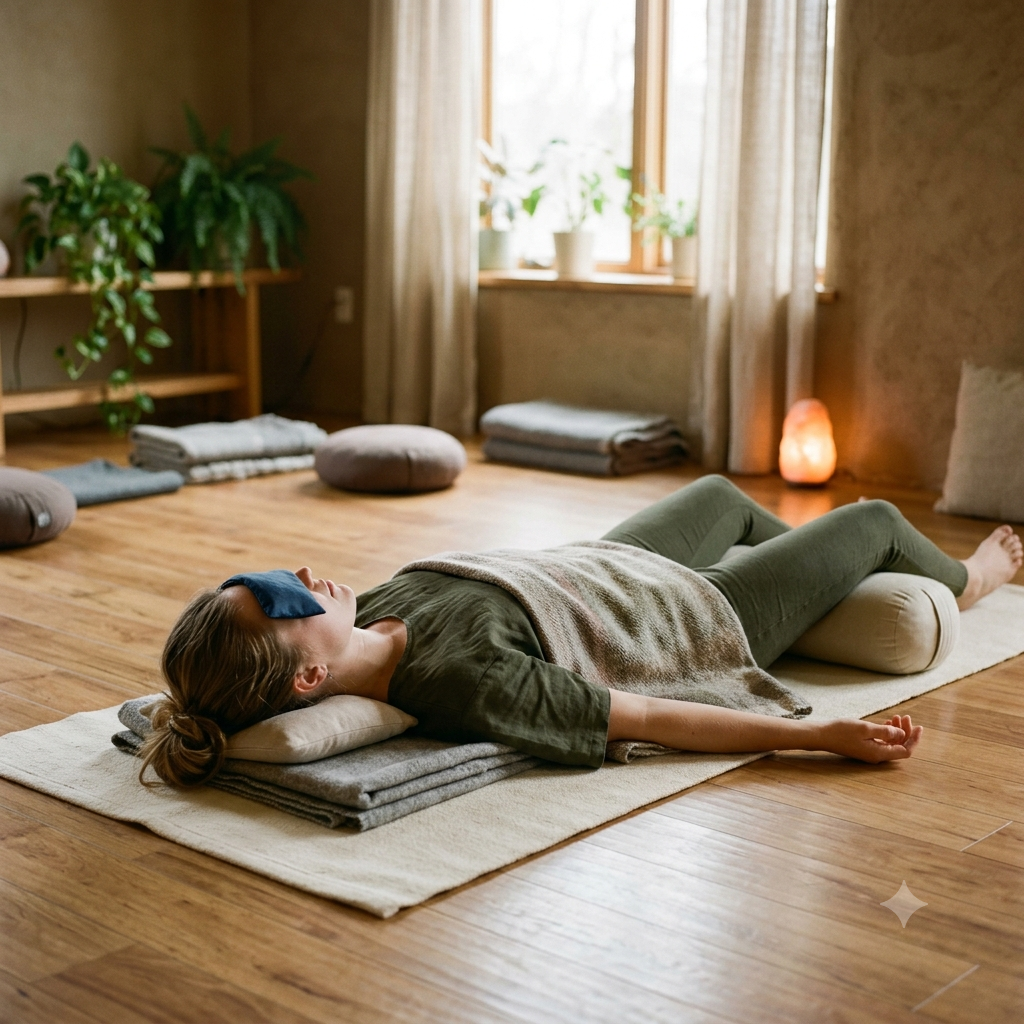
Yoga nidra, often called “yogic sleep,” is a guided relaxation and meditation practice that leads you into a deeply restful state between waking and sleeping—without movement or poses. It’s typically done lying in shavasana (corpse pose), following a structured sequence that systematically relaxes the body, calms the mind, and cultivates inner awareness.pmc.
Why Yoga Nidra Matters Today
In a world of constant stimulation, yoga nidra offers a practical way to:
- Reduce stress and anxiety
- Improve sleep quality
- Reset the nervous system
- Enhance emotional balance and mental clarity
Because it requires no physical effort, it’s accessible to almost anyone—including those recovering from injury, managing chronic pain, or new to meditation.health.
The Roots: Ancient Technique, Modern Application
Yoga nidra draws from tantric traditions and has been adapted for contemporary wellness and clinical settings. While traditional forms vary, modern yoga nidra usually follows a guided script that moves through specific stages of relaxation, breath awareness, and visualization.
How a Typical Yoga Nidra Session Works
Most sessions last 20–45 minutes and follow a consistent structure. Here’s a common 10-step framework used in many practices:
- Settle into shavasana – Lie comfortably on your back, supported by blankets or pillows as needed.
- Connect to a heartfelt desire – Bring to mind a meaningful goal or intention for your life or well-being.
- Set a sankalpa (intention) – Choose a short, positive affirmation like “I am calm” or “I release tension.”
- Find your inner resource – Visualize a safe, comforting place or memory that makes you feel secure.
- Body scan – Move awareness through different parts of the body, noticing sensations and releasing tightness.
- Breath awareness – Observe the natural flow of breath without trying to change it.
- Welcome emotions – Allow feelings to arise without judgment; acknowledge them and let them pass.
- Witness thoughts – Observe thoughts as passing clouds rather than engaging with them.
- Experience joy or peace – Invite feelings of warmth, contentment, or stillness.
- Reflect and return – Gently bring awareness back to the room, repeating your sankalpa before rising slowly.
Sessions are often guided by a teacher or audio recording, especially for beginners.
Benefits Backed by Experience and Research
While more large-scale studies are needed, existing research and clinical observations suggest yoga nidra may help with:
- Stress reduction: Lowers cortisol and activates the parasympathetic (“rest-and-digest”) nervous system.
- Better sleep: Many people report falling asleep faster and waking more refreshed.
- Anxiety and mood support: Regular practice is linked to reduced anxiety and improved emotional regulation.
- Pain management: Used as a complementary tool for chronic pain and tension-related conditions.
Because it’s gentle and non-strenuous, it can be practiced daily or several times a week.
How to Start Your Own Yoga Nidra Practice
You don’t need special equipment—just a quiet space and about 20–30 minutes.
Step-by-step beginner guide
- Choose a time – Ideal times are morning (to set intention) or evening (to unwind). Avoid practicing right after a heavy meal.
- Create comfort – Lie on a yoga mat, bed, or couch. Use pillows under your knees or head if needed. Cover yourself with a blanket to stay warm.
- Minimize distractions – Dim the lights, silence your phone, and consider an eye mask or soft music if it helps you relax.
- Use a guided session – Search for “yoga nidra guided meditation” on YouTube, Spotify, or meditation apps. Many free options range from 10 to 45 minutes.
- Set a simple intention – Before you begin, silently repeat a phrase like “I allow myself to rest” or “I am safe and relaxed.”
- Let go of expectations – It’s normal for the mind to wander or for you to fall asleep, especially at first. Just return gently to the guide’s voice.
- Return slowly – When the session ends, wiggle your fingers and toes, take a few deep breaths, and sit up gradually. Take a moment to notice how you feel before jumping into activity.health.
Tip: Consistency matters more than duration. Even 10–15 minutes a day can build noticeable benefits over time.
Common Questions About Yoga Nidra
Is yoga nidra the same as meditation?
It’s closely related but not identical. Both cultivate awareness and calm, but yoga nidra is more structured, always done lying down, and specifically designed to induce a sleep-like state while remaining conscious.
Can I fall asleep during yoga nidra?
Yes—and that’s okay. Many people do, especially when starting out. Over time, you may find yourself staying more aware while still deeply relaxed.
How often should I practice?
There’s no single “right” answer. Some people benefit from daily practice; others do 3–5 times a week. Listen to your body and schedule. Even occasional sessions can be restorative.
Is yoga nidra safe for everyone?
Generally, yes. It’s gentle and non-strenuous. If you have severe trauma, dissociation, or certain mental health conditions, consider practicing with a qualified teacher or discussing it with a healthcare provider first.
A Simple Yoga Nidra Script You Can Try
If you’d like to experiment without a recording, here’s a basic outline you can follow (or record in your own voice):
- Lie down in shavasana, arms slightly away from your body, palms up. Close your eyes.
- Take three slow, deep breaths. On each exhale, imagine releasing tension.
- Silently set an intention: “During this practice, I allow my body and mind to rest deeply.”
- Bring awareness to your feet. Notice any sensations—warmth, pressure, tingling. Then imagine them softening.
- Slowly move your attention upward: ankles, calves, knees, thighs, hips, abdomen, chest, hands, arms, shoulders, neck, face, scalp. At each area, simply notice and relax.
- Shift to your breath. Feel the air entering and leaving your nostrils. Notice your belly rising and falling. No need to change anything—just observe.
- Allow any thoughts or emotions to come and go like clouds in the sky. You don’t need to follow them or push them away.
- Imagine a warm, golden light filling your body from head to toe, bringing a sense of safety and peace.
- Repeat your intention silently two or three times.
- Gently bring awareness back to the room. Wiggle your fingers and toes. When ready, open your eyes and sit up slowly.
Making Yoga Nidra Part of Your Routine
To build a sustainable practice:
- Anchor it to an existing habit – For example, after brushing your teeth at night or before your morning coffee.
- Start small – Begin with 10–15 minute sessions and increase as you feel comfortable.
- Track how you feel – Notice changes in sleep, stress levels, mood, or energy over a week or two.
- Be kind to yourself – Some days your mind will be busy; that’s normal. The benefit comes from showing up, not from “perfect” relaxation.
Final Thoughts
Yoga nidra is less about “doing” and more about “allowing.” In a culture that rewards constant productivity, it offers a radical act: giving yourself permission to rest deeply while fully present. Whether you’re struggling with sleep, stress, or simply craving more inner calm, yoga nidra is a simple, evidence-informed tool worth exploring.